

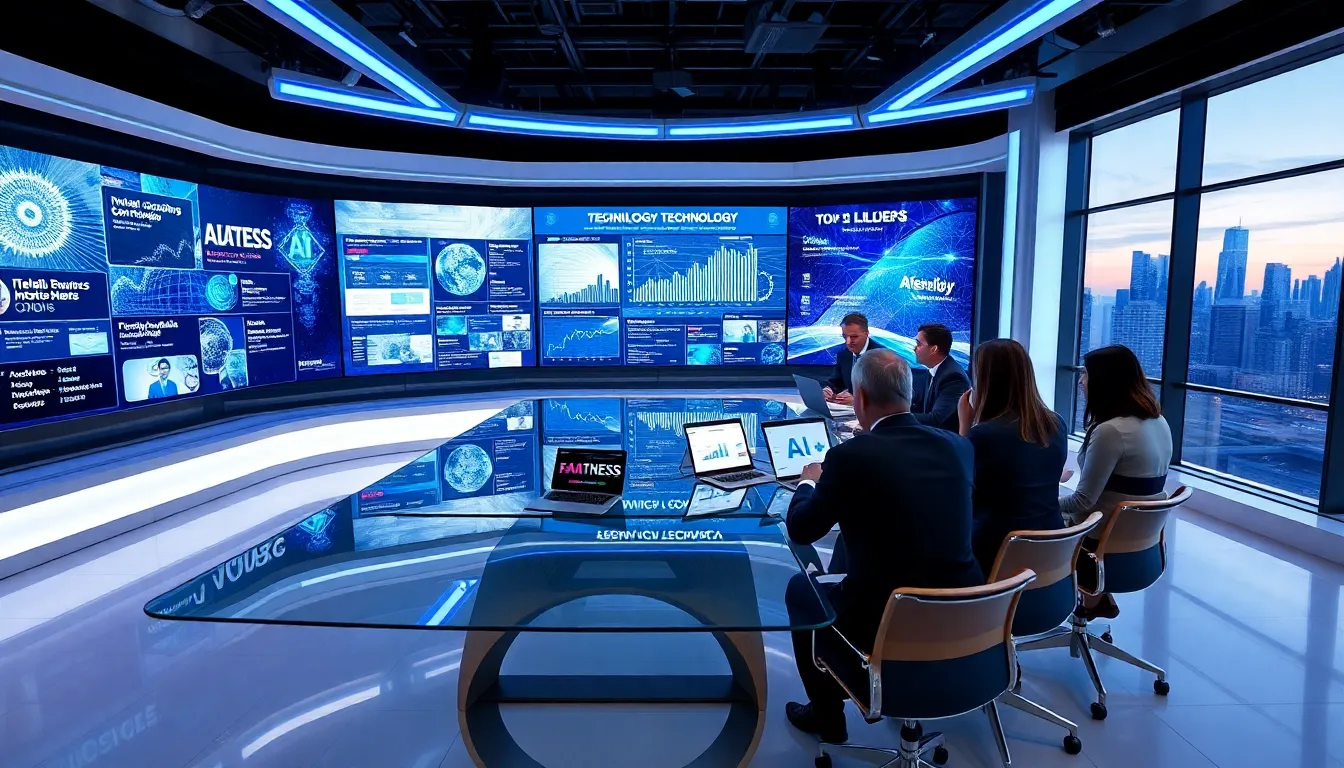
Technology news moves fast. Every week brings fresh announcements, product launches, and breakthroughs that reshape how people live and work. From AI systems that write code to solar-powered gadgets, the pace of change shows no signs of slowing. Staying informed matters, whether someone runs a business, works in tech, or simply wants to understand the tools shaping daily life. This article covers the biggest technology news trends right now: artificial intelligence advances, sustainable tech, consumer electronics, cybersecurity threats, and practical ways to keep up with it all.
Table of Contents
ToggleKey Takeaways
- Technology news in 2024-2025 is dominated by AI breakthroughs, sustainable tech, consumer electronics, and rising cybersecurity threats.
- Generative AI tools like GPT-4, Claude, and Midjourney are transforming how businesses create content, code, and marketing materials.
- Sustainable technology gains momentum as companies invest in renewable energy, electric vehicles, and right-to-repair initiatives to reduce e-waste.
- Cybersecurity attacks are growing more sophisticated, making password managers, two-factor authentication, and passkeys essential for protection.
- Stay current with technology news by using aggregators, trusted publications, podcasts, and curated newsletters to filter information overload.
- Setting dedicated times to check tech updates twice daily helps you stay informed without disrupting productivity.
Artificial Intelligence and Machine Learning Breakthroughs
Artificial intelligence dominates technology news headlines in 2024 and 2025. Large language models like GPT-4 and Claude have moved from research labs into everyday applications. People use them to draft emails, summarize documents, and generate code.
Generative AI represents the most visible shift. Tools like Midjourney and DALL-E create images from text prompts. Businesses use these systems for marketing materials, product mockups, and creative projects. The technology saves time and reduces production costs.
Machine learning also advances in less flashy but equally important ways. Healthcare companies deploy AI to detect diseases earlier. Radiologists use machine learning models to spot tumors in scans that human eyes might miss. Drug discovery pipelines now include AI systems that predict how molecules will behave.
Autonomous vehicles continue their slow march toward widespread adoption. Companies like Waymo and Cruise operate robotaxi services in select cities. Tesla pushes its Full Self-Driving software to more customers, though true autonomy remains elusive.
The AI chip race heats up too. Nvidia dominates the market for training large models, but AMD, Intel, and startups like Cerebras compete for share. Apple and Google build custom AI chips for their devices. This hardware competition drives technology news coverage because faster chips mean smarter applications.
Critics raise valid concerns about AI. Job displacement worries workers in creative and administrative fields. Bias in training data produces unfair outcomes. Deepfakes threaten to erode trust in video and audio evidence. These debates will shape AI regulation for years to come.
The Rise of Sustainable Tech Solutions
Climate change pushes technology companies toward greener practices. Sustainable tech now commands significant attention in technology news.
Data centers consume enormous amounts of electricity. Google, Microsoft, and Amazon pledge to run their cloud operations on renewable energy. Some build data centers near hydroelectric dams or wind farms. Others invest in nuclear power to meet their growing energy needs.
Electric vehicles represent the most consumer-visible sustainable technology. Tesla leads the market, but legacy automakers catch up. Ford, GM, and Volkswagen release competitive electric models. Battery technology improves steadily, ranges extend while charging times shrink.
Solar panel efficiency climbs each year. New materials like perovskites promise cheaper manufacturing and better performance. Home battery systems from companies like Tesla and Enphase let households store solar energy for nighttime use.
E-waste presents a growing problem. Discarded phones, laptops, and tablets contain valuable materials alongside toxic substances. Some manufacturers now design products for easier recycling. Apple’s robot Daisy disassembles old iPhones to recover aluminum, cobalt, and rare earth elements.
Right-to-repair movements gain momentum. Legislation in the EU and several US states requires manufacturers to provide repair manuals and spare parts. This shift extends product lifespans and reduces waste.
Green tech investments surge. Venture capital flows into startups working on carbon capture, sustainable agriculture, and clean energy storage. These companies generate frequent technology news as they announce funding rounds and product launches.
Consumer Electronics and Device Innovations
Consumer electronics remain a core topic in technology news. New devices launch constantly, each promising better features and performance.
Smartphones evolve incrementally. The latest iPhones and Samsung Galaxy devices offer improved cameras, faster processors, and brighter displays. Foldable phones gain traction, Samsung’s Galaxy Z Fold and Z Flip lines prove the concept works. Chinese manufacturers like Oppo and Xiaomi push foldable technology forward with thinner designs.
Wearables expand beyond fitness tracking. Apple Watch detects irregular heart rhythms and can call emergency services after falls. Smart rings from Oura and Samsung track sleep and activity without the bulk of a wristband. AR glasses from Meta and others hint at a post-smartphone future, though mass adoption remains years away.
Gaming hardware delivers impressive power. Sony’s PlayStation 5 and Microsoft’s Xbox Series X offer near-photorealistic graphics. Nintendo focuses on hybrid portability with the Switch platform. PC gaming thrives thanks to powerful GPUs from Nvidia and AMD.
Smart home technology matures. Voice assistants from Amazon, Google, and Apple control lights, thermostats, and security cameras. The Matter standard promises interoperability between devices from different manufacturers. Consumers can mix and match products without worrying about compatibility.
Laptops and tablets blur together. iPad Pro runs desktop-class software. Microsoft’s Surface line offers full Windows in tablet form. Chromebooks dominate education markets with their low prices and simple management.
Cybersecurity Challenges in an Evolving Landscape
Cybersecurity threats generate urgent technology news. Attacks grow more sophisticated while the stakes rise higher.
Ransomware attacks hit hospitals, schools, and city governments. Criminal groups encrypt victim data and demand payment in cryptocurrency. Some attacks disrupt critical infrastructure, pipelines, power grids, and water treatment plants face increasing risk.
Phishing remains the most common attack vector. Criminals craft convincing emails that trick employees into revealing passwords or clicking malicious links. AI makes these attacks harder to spot. Generative AI creates phishing messages without the grammar errors that once served as warning signs.
Nation-state hackers target government agencies and defense contractors. China, Russia, North Korea, and Iran maintain active cyber operations. These groups steal intellectual property, gather intelligence, and sometimes prepare for future conflicts.
Zero-day vulnerabilities fetch high prices on black markets. These unknown flaws let attackers bypass security measures before patches exist. Companies like Google and Microsoft offer bug bounties to encourage researchers to report vulnerabilities responsibly.
Password managers and two-factor authentication provide essential protection. Passkeys, a new standard backed by Apple, Google, and Microsoft, promise to replace passwords entirely. Biometric authentication using fingerprints and face scans adds another security layer.
Companies invest heavily in cybersecurity tools and training. The global cybersecurity market exceeds $200 billion annually. Demand for security professionals outpaces supply, creating career opportunities for those with relevant skills.
How to Stay Updated on Tech News
Keeping up with technology news requires a strategy. The volume of information overwhelms anyone who tries to read everything.
News aggregators help filter the noise. Google News, Flipboard, and Apple News learn user preferences and surface relevant stories. RSS readers like Feedly let users subscribe to specific publications and blogs.
Trusted publications provide reliable coverage. The Verge, Ars Technica, and Wired offer in-depth reporting on consumer technology. TechCrunch focuses on startups and venture capital. MIT Technology Review delivers thoughtful analysis of emerging technologies.
Podcasts fit into commutes and workouts. Shows like “The Vergecast,” “Accidental Tech Podcast,” and “Reply All” cover technology news in conversational formats. These programs often feature expert guests who provide context missing from written articles.
Social media offers real-time updates. Following journalists, researchers, and company executives on platforms like X (formerly Twitter) and LinkedIn delivers breaking technology news quickly. Subreddits like r/technology and r/gadgets surface trending stories through community voting.
Newsletters cut through inbox clutter. Many technology journalists publish email roundups. These curated digests highlight the most important stories without requiring readers to visit multiple sites.
Setting specific times for technology news consumption prevents distraction. Checking updates twice daily, morning and evening, keeps readers informed without disrupting productive work.

